What YouTube's Footer Reveals About Its Business Strategy and Legal Landscape in 2026
What YouTube's Footer Reveals About Its Business Strategy and Legal Landscape in 2026
Introduction: The Unseen Blueprint in the Footer
Most internet users scroll past website footers without a second glance. A tangle of legal links, corporate addresses, and copyright notices appears as little more than digital boilerplate. But for those who study platform strategy, a footer can be as revealing as a quarterly earnings call. YouTube's footer, scraped and analyzed in early 2025, contains a carefully curated set of links that together form a hidden blueprint of the platform's economic priorities, regulatory obligations, and forward-looking posture.
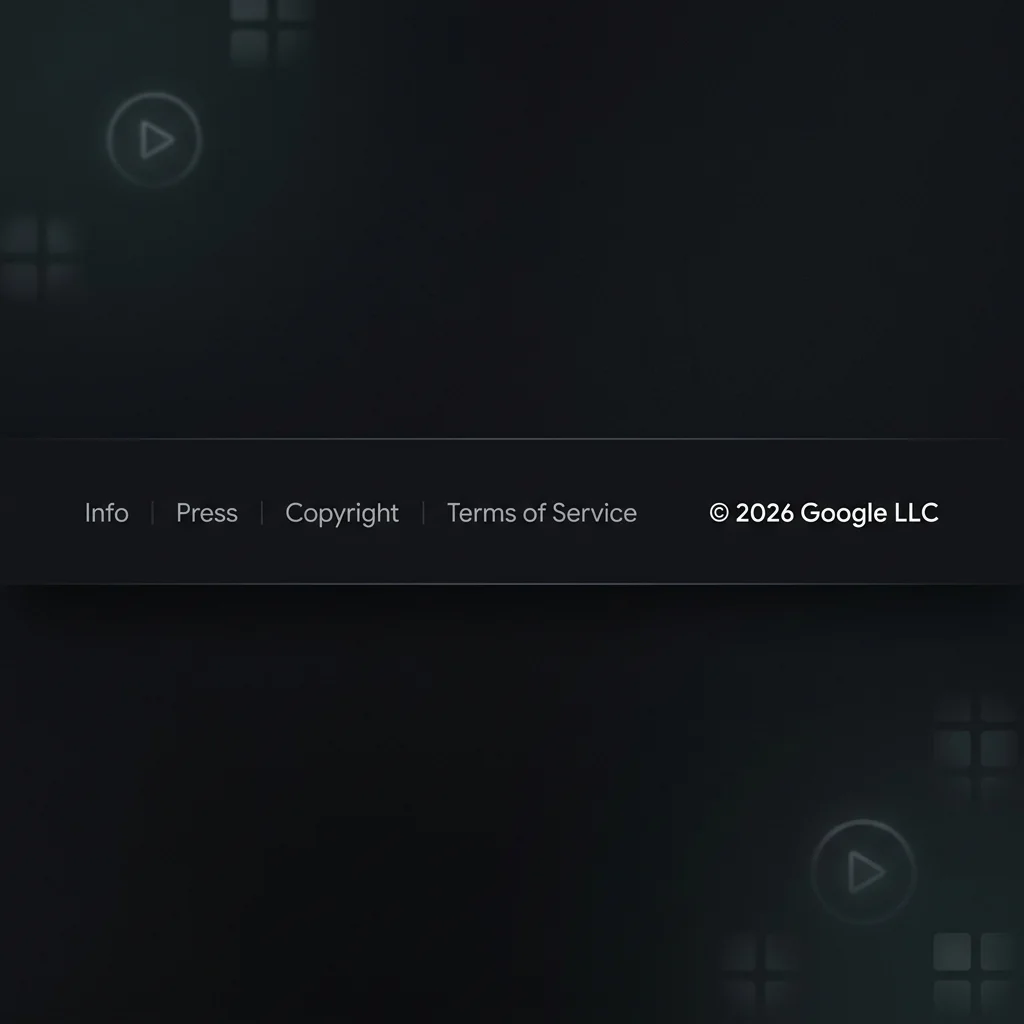
Among the most striking details is the copyright line: "© 2026 Google LLC." In an era where most websites update their copyright year automatically, the appearance of a future year — 2026 — is no accident. It suggests deliberate planning beyond the current fiscal cycle, and hints at YouTube's confidence in its long-term operational stability. But the copyright is only one piece of a larger puzzle. From "Advertising" to "Creator Resources," from "Developers" to an "Imprint" link targeting German users, each element of the footer reveals a revenue pillar, a stakeholder relationship, or a legal compliance mechanism that underpins the world's largest video platform.
This article decodes the hidden economic logic behind YouTube's footer structure, offering insights for executives, editors, creators, and industry watchers. By turning a mundane interface component into a lens on platform governance and market dynamics, we can better understand how YouTube balances its dual role as a global content hub and a regulated entity.
[IMAGE: Screenshot of YouTube's footer with key links highlighted, overlaid with annotations such as 'Revenue driver', 'Legal shield', 'Creator investment'.]
---
The Economic Logic of Footer Links: More Than Navigation
At first glance, the footer links appear to serve a straightforward navigational purpose: help users find information about the company, its policies, and its products. But a closer look reveals a deliberate hierarchy that mirrors YouTube's business model.
Advertising: The Primacy of Monetization
The link to "Advertising" sits prominently near the top of the footer. This is no coincidence. YouTube's primary revenue stream — digital advertising — depends on maintaining a massive, engaged user base while providing advertisers with precise targeting and measurable outcomes. The footer link serves as a gateway: brands and agencies clicking through land on a dedicated "YouTube Advertising" page that outlines ad formats, pricing, and case studies. In 2024, YouTube's ad revenue exceeded $31 billion, making it the second-largest digital advertising platform after Google Search. The prominence of this link signals that the platform's economic engine remains advertising-first.
[IMAGE: Infographic showing how each footer link maps to a business function, e.g., 'Advertising' → ad revenue, 'Terms of Service' → risk mitigation, 'Creator Resources' → content supply chain.]
Creator Resources: Investing in the Supply Side
Immediately adjacent to "Advertising" is "Creator Resources." This link points directly to YouTube's Creator Academy, Partner Program guidelines, and monetization tools. The placement is strategic: YouTube's value proposition to advertisers depends entirely on the volume and quality of content supplied by creators. By making creator resources a first-class footer element, YouTube signals that its creator economy is not an afterthought but a core growth driver. In 2025, the platform paid out more than $50 billion to creators, musicians, and media companies since the Partner Program launched. The footer link serves as a constant reminder that the platform is actively investing in its content supply chain.
Developers and the API Ecosystem
The "Developers" link opens the door to YouTube's API suite, including the Data API, the YouTube Studio API, and third-party integration tools. This link represents the platform's two-sided marketplace at the infrastructure level. Independent developers build apps, analytics tools, and content management systems on top of YouTube's APIs. In return, YouTube gains an ecosystem of extensions that deepen engagement and lock in business users. The footer's inclusion of "Developers" — often buried on other platforms — signals that YouTube views third-party integrations as strategic assets, not side projects.
How YouTube Works: Trust and Transparency
The "How YouTube Works" link is a relatively recent addition, emerging after years of public scrutiny over recommendation algorithms, misinformation, and content moderation. This page explains the platform's policies on hate speech, copyright, election integrity, and child safety. By placing it in the footer, YouTube is signaling to regulators, users, and the press that it takes governance seriously. It functions as a public-facing compliance document, anticipating questions from lawmakers in jurisdictions like the European Union, where the Digital Services Act (DSA) mandates transparency reporting.
Imprint, Contract Termination, and Local Compliance
Among the cleaner footer data, a German-language entry stands out: one or more strings related to "Impressum" (the German legal notice requirement). Under the German Telemediengesetz (TMG), commercial websites must display a clear imprint with the company's registered address, legal representative, and contact details. YouTube's footer includes this explicitly, reflecting the platform's obligation to comply with national laws across its global user base. Similarly, "Contract Termination" links appear in some regional versions of the footer, likely tied to the EU's right of withdrawal for digital services.
The hidden pattern is clear: every footer link serves a distinct business function — revenue generation (Advertising), content supply (Creator Resources), infrastructure (Developers), trust and governance (How YouTube Works), or legal compliance (Imprint, Terms of Service, Privacy). There are no generic "About" links that lack strategic intent. This is a footer designed by lawyers, product managers, and business strategists working in concert.
---
Why © 2026? The Strategic Signal of a Future Copyright
Perhaps the most intriguing element of the footer is the copyright line: "© 2026 Google LLC." In early 2025, standard corporate practice dictates using the current year — 2025. So why 2026?
Placeholder or Forward-Looking Stance?
One possibility is technical: the copyright year might be a placeholder that will update automatically on a future date, and a scraping attempt captured a transitional state. But copyright notices on major platforms are rarely accidental. Another, more strategic interpretation is that YouTube (and parent company Google LLC) is signaling long-term planning. The use of a future year suggests confidence in the platform's operational continuity, potentially anticipating multi-year contracts with creators, advertisers, or rights holders.
Regulatory Foresight
The copyright line also has legal implications. Under U.S. copyright law, works created by a corporation are protected for 95 years from publication. Displaying "2026" could be a deliberate choice to establish a clear copyright claim for content published in that year, especially if YouTube is pre-planning content licensing agreements or preparing for changes in copyright law. For instance, the EU's Copyright Directive (Article 17) requires platforms to demonstrate "best efforts" to prevent unauthorized uploads of copyrighted works. A forward-dated copyright line may be part of a broader compliance posture: by asserting copyright on the platform's own generated content (e.g., algorithmically curated playlists, AI-generated thumbnails, metadata), YouTube strengthens its legal position in disputes over ownership and liability.
Competitive Signal
For competitors like TikTok, Vimeo, or Twitch, a small detail like a copyright year can become a data point in strategic analysis. A forward-dated copyright may be interpreted as a sign that YouTube expects to remain the dominant video platform through 2026 and beyond, influencing advertiser commitments and creator exclusivity deals. In an industry where trust and stability are paramount, this minor design choice reinforces YouTube's narrative of longevity.
[IMAGE: Close-up of the copyright line in the footer with a magnifying glass effect, plus a timeline graphic showing past YouTube copyright years vs. the forward-looking 2026.]
---
Localization and the Global Reach: The German Quote
The footer data reveals a specific German-language element: "Auf YouTube" (On YouTube), followed by links to "Imp... - Mehr Informationen" (likely an abbreviated "Impressum"). This is not an anomaly but a deliberate localization strategy. YouTube operates in over 100 countries and supports more than 80 languages. Yet its footer is not a one-size-fits-all design. It adapts to local legal requirements.
The German Imprint Requirement
Germany's Telemediengesetz (TMG) requires all commercial online platforms to provide an "Impressum" that includes the company's full legal name, address, telephone number, email, and regulatory information. Failure to comply can result in fines and legal action from competitors or consumer protection groups. YouTube's footer explicitly includes a link to this imprint for German users, often titled "Impressum" or "Anbieterkennzeichnung." The presence of the phrase "Auf YouTube" suggests that the footer is dynamically generated, with localized strings inserted for each market.
Broader Implications for Platform Governance
This localization extends beyond Germany. In France, the footer must comply with the Loi pour la Confiance dans l'Économie Numérique (LCEN). In Brazil, the Marco Civil da Internet imposes data retention and content removal obligations. In India, the Information Technology (Intermediary Guidelines) Rules require platforms to publish a grievance officer's contact details. YouTube's footer is a living document that must be continuously updated to reflect these varying requirements. The cost of non-compliance is significant: in 2024, the EU fined TikTok €345 million for failing to comply with data protection rules. YouTube's meticulous footer design reflects an organizational commitment to avoiding similar penalties.
[IMAGE: World map with flags highlighting countries where YouTube's footer includes specific local legal links (Germany, France, Brazil, India, EU region), with annotations describing each requirement.]
---
Platform Governance and Legal Compliance: The Hidden Cost
The footer is not just a navigation tool; it is a compliance interface. Every link to "Terms of Service," "Privacy Policy," "Copyright," "Contract Termination," and "Impressum" represents a legal obligation that YouTube must fulfill to operate in hundreds of jurisdictions.
Terms of Service and Binding Arbitration
The "Terms of Service" link is perhaps the most litigated element of any digital platform. YouTube's terms include mandatory arbitration clauses and class-action waivers, which have been challenged in courts worldwide. The footer link serves as the primary means of notifying users. Under the U.S. Federal Arbitration Act, platforms must provide "conspicuous" notice of arbitration terms. By placing the link in a persistent, low-visibility but legally sufficient location (the footer), YouTube balances user experience with legal defensibility.
Copyright and the DMCA Safe Harbor
The "Copyright" link directs to YouTube's copyright policy, including instructions for filing a takedown notice under the Digital Millennium Copyright Act (DMCA). This link is essential for maintaining the platform's safe harbor protections. Under Section 512 of the DMCA, platforms must designate an agent to receive infringement notices and publicly disclose that agent's contact information. YouTube's footer ensures this disclosure is always accessible.
A Growing Compliance Burden
As of 2025, YouTube faces new obligations under the EU Digital Services Act (DSA), which requires very large online platforms (VLOPs) to publish transparency reports, conduct risk assessments, and share data with regulators. The footer's "How YouTube Works" link, combined with updated privacy policies, is part of this compliance framework. The DSA also mandates that platforms provide clear information about content moderation decisions, including why a video was removed. The footer's "Community Guidelines" link serves this purpose.
[IMAGE: Diagram showing the legal lifecycle of a YouTube user interaction — from clicking Terms of Service to DMCA takedown — with footer links as entry points.]
---
Implications for Creators and Advertisers
The footer's strategic design has direct consequences for two key stakeholder groups: creators and advertisers.
For Creators: Navigating the Ecosystem
Creators who rely on YouTube's monetization must understand the links buried in the footer. "Creator Resources" provides access to the Partner Program, but the "Terms of Service" link governs everything from ad revenue share to content ownership. A creator who ignores the "Copyright" link risks strikes that can demonetize their channel. The "Contract Termination" link (present in some regional footers) outlines how creators can leave the platform — a critical piece of information for those considering multi-platform strategies.
For Advertisers: Trust and Auditability
Advertisers evaluating YouTube as a placement need confidence that the platform will remain compliant with evolving regulations. The footer's transparency links — "How YouTube Works," "Impressum," "Privacy Policy" — serve as signals of institutional rigor. A brand conducting due diligence before a large campaign can examine these links to assess legal risk. The presence of a forward-dated copyright (2026) may also reassure advertisers that YouTube is not planning any near-term structural changes that could disrupt ad delivery.
---
Conclusion: The Footer as a Strategic Document
YouTube's footer is far more than a collection of hyperlinks. It is a strategic document that encodes the platform's revenue priorities, legal obligations, and future outlook in a format so compressed that most users never pause to read it. The careful placement of "Advertising" and "Creator Resources" side by side reveals the dual-sided marketplace that drives YouTube's economics. The inclusion of "Developers" speaks to the platform's reliance on third-party integrations. The German "Impressum" link highlights the cost of global compliance. And the 2026 copyright notice — whether placeholder or deliberate signal — forces us to consider how platforms plan for longevity in a fragmented regulatory environment.
For industry watchers, the lesson is clear: pay attention to the small things. The footer is a window into how YouTube sees itself — as a content hub, an advertising engine, a developer ecosystem, and a regulated entity. As the digital landscape grows more complex, the humble footer will only become more revealing. Next time you scroll to the bottom of YouTube, take a moment to read what's there. It holds more information than you might expect.
[IMAGE: A minimalist illustration of a website footer transformed into an architectural blueprint, with each link labeled as a structural pillar — 'Revenue', 'Compliance', 'Community', 'Infrastructure'.]